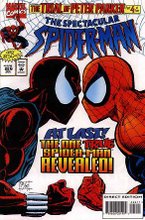
If you take posts on the internet to be a judge of people's opinions on Civil War, I am the only person on the planet who not only liked Civil War, but was on Tony's side (for the most part). In this post I intend, way, way too late for it to be of any interest to anyone, to show why I think that not only was the comic well conceived and for the most part well executed, but that 'in' universe, Tony's stance, whether or not Tony himself is a douchebag, is pretty much the only way to go.
As a Comic:
Progressing from the comparatively trivial the the profound, I'll start of by agreeing, and perhaps emphasizing what Exar said below; Steve McNiven's art is amazing.
Aside from that...
I think what people don't like about civil war shoots straight in from the tie-ins. Amazing Spider-Man's tie-ins were shit, for the most part insulting to the readers thereof, and diminished Spider-Man as a whole. No, I'm not talking about the demasking; I'm for that, actually. But basically, Spider-Man goes from sucking Tony's dick, to rebelling against him because he doesn't have a stomach for seeing people put in prison. Eric posted a quote from a friend of his on my blog about how he was 'with Spider-Man, taking the tagline of the series and putting his own spin on it. but basically, I see Spider-Man's position in Civil War as the worst; He's a dumbshit who picks the right side for the wrong reasons and switches to the wrong side for the weakest reasons. I love Spidey, and such is his lot in life, so I'm not screaming about how they took him off of 'my' side, but wow.
Reading Civil War #1-7 by themselves, they suffer a bit from rushing, and force some of the details into other books, but by themselves they are filled with snappy dialogue, amazing art and gripping cliffhangers. Sure, it was filled with some dumb choices; Why Pym couldn't shrink Goliath, I have no idea. But when you read utter garbage like Civil War: X-Men, it's hard to believe in the quality of this crossover.
Something like this was inevitable in a universe with any loose attachment to our world- it is an updating of the Marvel Universe to the post 9-11 atmosphere of fear and legislative control.
Can I say something for the forum geeks? I'm going to.
Marvel isn't on Tony's Side. They aren't on Cap's side, either. They're on the side that has you clenching your fist, angry and upset or righteously indignant, caring about the Marvel Universe the same way that wonks care about the politics of our universe. They thrill as you buy up books to support characters who are on 'your side'. They are in the business of telling good stories, not telling ones where everything is happy. Look at politics again; Elections over which people are bitterly divided have by far, far far the highest turnout. Correspondingly, divisive, controversial stories sell the most comics, and Civil War drives that home by being the best selling comic of 2006, and possibly the best seller of 2007, as well. (well, really, 52 sold more comics than any other comic last year, because there were like 30 published in the year; but 52 is really much more like 7 or 8 comics cut up and spliced together; and single issues of Civil War outsold single issues of 52 by wide margins.)
Now, as to why Tony's right...
I'm not going to argue about Tony's methods. While I myself hope that when I die, my friends clone me, Tony does a lot of dubious things in Civil war, and even more things that are confusingly written and leave a lot of room for interpretation (I think, for example, his hiring of Titanium Man in Amazing Spider-Man's prelude to Civil War was an attempt to show that the system is working- Exar thinks it was to precipitate the passing of the act)But Tony is not the living embodiment of registration, and there could be a registration act with or without him, and we should examine its merits and flaws, and they come in two parts.
1: Superhuman Registration, and 2: Superhero licensing and deputizing.
Superhuman registration is the tough ethical one. It's hard to put a stand on it, because when it comes down to mutants, it's racial profiling. OF course, there is a real, bonafide difference between a mutant, and say, a second generation Mexican-American; A mutant could explode you. Now granted, not all mutants can- in fact, most mutants can't, but let's discuss the ethical grounds for making a distinction.
One of the things about racial discrimination in our world is that it is unjust. Not hiring a black person because he is black is unjust, because we, as enlightnened people, know that all other things being equal, the color of a person's skin, or the shape of their genitalia, means jack-shit all about what they can or can't do. Similarly, that they can do and cannot do all the same things that we can do, so creating laws over color simply is automatically unfair; judging someone for a superficial difference that they can't control.
A mutant has a difference, and they can't control it; but it is often far from superficial. Many mutants have an immense power over the 4 freedoms of others, and worse yet, not all of them even have control over their powers. What good is being free an unregistered if a child with powers the likes of Cyclops is born to A backwoods family of Church of Christ Scientists? Not much. He's likely to kill everyone around him until the authorities are forced to put him down when he endangers others. And not having a law in place that makes it so authorities are authorized or required to help this child seems... stupid, to me. Granted, it does somehow ring of fascism, say, when a mutant like Beak is forced to register. But being registered is not itself an undue violation of liberty or privacy. Much like a warrant, the authorities would need to have reasonable cause to assume a person has powers, and then be responsible to conduct their dealings with a mutant with powers above the board, on the level, and in a way that preserves every freedom possible.
Essentially, powers or mutantdom become something akin to Driving; If you have powers, good for you; but if you are using them, you must register. While there are some legilative differences between this last stance, the right one, and what the law in the MU actually is, in practice, as shown in CW: the Initiative #1, in practice they are the same- A mutant who has the power to set fire to things has little to fear if he doesn't use his powers, or uses them only on his own property on his own time. Finally, a mutant compliant with these regulations is no doubt protected by the Equal opportunity act.
There's also the little racial matter that the Mutants are an endangered species, under protection from both the U.N. and the U.S. government and are all registered with the authorities before CW even starts.
When it comes to people who get their powers from 'happy accidents', their right are a little less clear. They're not being profiled for their race; they have been the recipients of radiation or genetic tampering. Their powers may very, very well cause them cancer or other diseases. They are not subject to even the gentle guiding hand of mother nature towards survivable traits. They may even be the result of alien genetic tampering (Nitro, Ms. Marvel, etc.)and literally sent here to kill us all. It sucks, but you have to legislate the part of them that is a national interest, and then do the right thing and protect the rest of their lives. Registration and Equal Opportunity protections are the right thing. With people like these, it's no longer profiling; nobody cares if their appearance simply changed, except possibly of compassion or attraction; it's focused right on where the public has a right to be concerned; mass public harm or infringement of liberties.
As for the draft...
While CW: the initiative #1 seems to imply that registering is the same as being up for the draft, Joe Quesada has been abundantly clear: Registering is not the same as signing up for the 'draft' so to speak; The 'draft' applies when you decide you want to use your powers to become a costumed crimefighter, and that when you do, you may be asked to provide cooperation and support in legitimate peacekeeping actions. Because Kirkman, the writer of the initiative, is a genius, I'm assuming that the revelation of the difference between the two to Cloud 9, the young heroine in CW:tI#1 either happens off panel, or that War Machine was intentionally misleading.
Taking aside the in-comic depictions in CW:tI, a draft seems draconian to us, but mandatory terms of service for citizens is fairly common in our world: the following countries all have mandatory armed services for citizens:
Albania
Austria
Belarus
Bermuda
Brazil
Bulgaria
Chile
China (PRC)
Croatia
Cyprus
Denmark
Egypt
Eritrea
Finland
Germany
Greece
Iran
Israel
Korea, South
Malaysia
Mexico
Norway
Poland
Russia
Serbia
Singapore
Sweden
Switzerland
Taiwan (ROC)
Turkey
Ukraine
While many of these countries are not exactly shining examples in the fight for human liberties, the idea of citizenship as a privilege and service as a/the means of gaining that privilege is hard to really see as truly malevolent, draconian and fascistic. And if the draft works as Joe Quesada (marvel's Editor In Chief) implies, then it is not much different than obligations all of our nation's law enforcement must adhere to.
Finally, vigilantism.
Vigilantism is wrong. Period. It's against the law in America, and with good reason- First of all, having justice dispensed by a dispassionate system protects justice from being subsumed by revenge; it allows us a nationwide understanding of what is wrong and what is right. It keeps us from having 'justice' dispensed by a neighbor who thinks that what two men or women do in the privacy of their own bedroom is a crime against god, punishable by death.
Personal justice is of course wrong. I hope I don't have much dissent on this. Sure, an occasional act of citizen's justice, in line with the law of the land, is great. But when a guy puts on a pair of pajamas and goes out 7 nights a week to fight crime...
A police officer, in addition to being trained in how to protect the peace and the innocent, is also trained in the responsibilities of an officer of the peace. A police officer has regulations and training him telling him when to call for backup, when to read someone their rights, the liberties of suspects and how to respect them, and an order of operations for when people are in danger and crimes are being committed. Perhaps most importantly, a police officer is responsible to a chain of command and ultimately to the people if he discharges these duties improperly and recklessly. It is out and out wrong for a person to flout this responsibility simply because the person has powers. A court would throw out evidence gathered by an unlicensed, freelance detective working a case for a friend, and it would be intensely difficult for a jury to convict the kind of mugger that Spider-Man so often catches and leaves webbed to a lamp-post with some circumstantial piece of evidence webbed along with them. Apprehending people, subduing them, judging that they have violated the rights of others and then in turn compromising the rights of alleged wrongdoers in the service of the public good is a great power and should come with great responsibility.
Showing posts with label Marvel. Show all posts
Showing posts with label Marvel. Show all posts
Saturday, May 5, 2007


Sunday, March 25, 2007
Civil War Thoughts, Part the Second: What they got right.
This contains spoilers for Captain America #25, Civil War #1-7, and various other recent Marvel comics. Read at your own risk.
Lest it seem that I have nothing but disdain for Marvel's Civil War crossover event, I have decided to list here what I thought they did well, and what I hope to see more of in the future.
The Return of Captain Marvel
I thought this was really cool. Considering the fact that it was Nitro of all people that kicks off the show in Civil War #1, there's a neat bit of symmetry when Captain Marvel turns up unexpectedly. Bringing this character back was a smart move. He's fairly popular, and the setup is perfect. He's already been exposed to the cancer-causing gas. He's a dead man walking and he knows it. His wife has already mourned him, and he's surrounded by familiar people who he doesn't know.
There's so much pathos there it makes me want to cry. Whatever writer gets to play with Mar-Vell is in for a treat. There's some great material there.
The Fifty-State Initiative
This is cool on many levels. Sure at first glance it's silly, 'cause freaking Idaho doesn't have supervillain issues like New York does, why does it need a team?
But when you think about it, it opens the door for a lot of great storytelling. Wherever a chase or investigation leads you, you'll have a handful of supporting characters for backup. And in the hands of a good writer, even a team of c-listers can be fun. Just look at Squirrel Girl and the Great Lakes Avengers.
Also, imagine the potential for conflict when people get touchy about jurisdiction. "Sorry, you can't chase that supervillain into Texas. He's Ranger business now. Go on home." There's even room for fish out of water stories. Imagine a hero from LA suddenly assigned to Kansas or North Dakota. Just picture Nighthawk cropdusting.
Captain America's Death
This one is a qualified like. His death was very well handled and respectful. It is having a significant effect on the Marvel Universe, and actually sparked human emotion fromUltronTony Stark. Ed Brubaker is a good writer, and with the help of Brian Bendis in New Avengers, has managed to make me care about Cap again. Brubaker does the very best he can with limited options. Shot by a sniper is not a terribly heroic way to go down. Even if the sniper is paid off by the Red Skull. It would have been much more satisfying for the fans if the Red Skull had done it personally somehow. But since he's "dead" and possessing some Russian guy (Why? I have no idea.), that wasn't an option. The Mind Control/triggered hypnosis on Sharon Carter is cool, though. It sets up what should be an interesting story arc in the issues to come.
The Art
Civil War is gorgeous. Honestly it is. Steve McNiven is good. The level of detail is nice too. A lot of symbolism thrown around, lots of torn masks and whatnot. The proportions and posing of the characters is highly realistic, which only heightens the feeling of immediacy that Marvel strove for in these books. They are trying to make their universe of flying men, mutants and magic seem more like our own, and art like this is a good way of doing it. The tie-in titles are fairly standard fare for their respective creators, but I didn't see anything glaringly bad. She-Hulk has great art as always, and I have to give them bonus points for actually depicting Shulkie as a full-figured woman, rather than yet another perfect hourglass figure. She has mass and bulk, and she should.
France
Fantastic Four # 541 was one of the best comics I've read in a long time. I laughed on almost every page, but at the same time, the humor was tempered by the knowledge of what Ben Grimm was running away from. His longing for a simpler time was one I understood completely.
Aunt May getting Shot
Not to be bloodthirsty or anything, but kill the old bat already. She's dead weight on the Spider-titles, and I really don't want to see another story arc about her and Jarvis hooking up. And really, if she lives through this, it's only a matter of time till Doc Ock comes for revenge and gets himself a MAX book.
Garth Ennis: I always wanted to do the Marvel version of Overfiend.
The Punisher in a mainstream book
He is not a Quentin Tarantino character, Marvel. He doesn't need to be hyperviolent 24/7 to sell comics. He's a Rambo style anti-hero. Write him like it. He's a trained military man, who has useful skills if you can just convince him to not shoot people. (This is hard to do.)
There were a lot more moments that I liked, such as Sue Richards stopping Tony from drinking, and Cap decking Punisher, but they are small against the bigger picture. Till next time, keep reading comics!
-Exar
Next: the plot hole so big, it tunneled straight to hell.
Lest it seem that I have nothing but disdain for Marvel's Civil War crossover event, I have decided to list here what I thought they did well, and what I hope to see more of in the future.
The Return of Captain Marvel
I thought this was really cool. Considering the fact that it was Nitro of all people that kicks off the show in Civil War #1, there's a neat bit of symmetry when Captain Marvel turns up unexpectedly. Bringing this character back was a smart move. He's fairly popular, and the setup is perfect. He's already been exposed to the cancer-causing gas. He's a dead man walking and he knows it. His wife has already mourned him, and he's surrounded by familiar people who he doesn't know.
There's so much pathos there it makes me want to cry. Whatever writer gets to play with Mar-Vell is in for a treat. There's some great material there.
The Fifty-State Initiative
This is cool on many levels. Sure at first glance it's silly, 'cause freaking Idaho doesn't have supervillain issues like New York does, why does it need a team?
But when you think about it, it opens the door for a lot of great storytelling. Wherever a chase or investigation leads you, you'll have a handful of supporting characters for backup. And in the hands of a good writer, even a team of c-listers can be fun. Just look at Squirrel Girl and the Great Lakes Avengers.
Also, imagine the potential for conflict when people get touchy about jurisdiction. "Sorry, you can't chase that supervillain into Texas. He's Ranger business now. Go on home." There's even room for fish out of water stories. Imagine a hero from LA suddenly assigned to Kansas or North Dakota. Just picture Nighthawk cropdusting.
Captain America's Death
This one is a qualified like. His death was very well handled and respectful. It is having a significant effect on the Marvel Universe, and actually sparked human emotion from
The Art
Civil War is gorgeous. Honestly it is. Steve McNiven is good. The level of detail is nice too. A lot of symbolism thrown around, lots of torn masks and whatnot. The proportions and posing of the characters is highly realistic, which only heightens the feeling of immediacy that Marvel strove for in these books. They are trying to make their universe of flying men, mutants and magic seem more like our own, and art like this is a good way of doing it. The tie-in titles are fairly standard fare for their respective creators, but I didn't see anything glaringly bad. She-Hulk has great art as always, and I have to give them bonus points for actually depicting Shulkie as a full-figured woman, rather than yet another perfect hourglass figure. She has mass and bulk, and she should.
France
Fantastic Four # 541 was one of the best comics I've read in a long time. I laughed on almost every page, but at the same time, the humor was tempered by the knowledge of what Ben Grimm was running away from. His longing for a simpler time was one I understood completely.
Aunt May getting Shot
Not to be bloodthirsty or anything, but kill the old bat already. She's dead weight on the Spider-titles, and I really don't want to see another story arc about her and Jarvis hooking up. And really, if she lives through this, it's only a matter of time till Doc Ock comes for revenge and gets himself a MAX book.
Garth Ennis: I always wanted to do the Marvel version of Overfiend.
The Punisher in a mainstream book
He is not a Quentin Tarantino character, Marvel. He doesn't need to be hyperviolent 24/7 to sell comics. He's a Rambo style anti-hero. Write him like it. He's a trained military man, who has useful skills if you can just convince him to not shoot people. (This is hard to do.)
There were a lot more moments that I liked, such as Sue Richards stopping Tony from drinking, and Cap decking Punisher, but they are small against the bigger picture. Till next time, keep reading comics!
-Exar
Next: the plot hole so big, it tunneled straight to hell.
Saturday, March 17, 2007
Civil War Thoughts, Part the First: Pro-registration- dead on arrival?
This post deals with Civil War #1-7, the supporting tie-in books and the aftermath. There are some spoilers below if you have not read Civil War #7, Captain America #25, or Amazing Spider-Man #538. You have been warned. That's more than you got from CNN.
Mr. Speed (and other people) have wondered why so few comics fans have fallen onto the pro-registration side of things in the wake of Marvel's Civil War event.
That's a good question, and some of the answers are part of my bigger problems with Civil War and Marvel's current editorial position in general, but for this post, I'll focus on why the Pro-Reg arguement never had a chance.
1. History.
Ever since the ground-breaking "Days of Future Past" story in X-Men #141-142, the realization of a mutant registration act has been one of the signs of impending doom for mutants at the least, other superhumans and normal humans in the more apocalyptic possible futures. Rachael Grey, Cable and Bishop all come from different possible futures where the Mutant Registration Act became law, and the persecution of mutants and development of the Sentinel program all but doomed humanity. Convincing comic fans that this very same Act, applied not only to mutants, but all superheroes, is suddenly a good thing is a nigh-impossible task.
2. Plausibility.
Marvel's effort to apply the X-Men's "sworn to protect a world that fears and hates them" shtick to all superheroes in the wake of M-Day isn't a bad idea, but presents a great many logistical problems. How do you make heroes like the Avengers, or the Fantastic Four, who have saved the entire world/universe multiple times, and have been publicly acknowledged as doing so, hated and feared by the common man?
Marvel's answer: kill some kids.
Stamford was a tragedy, sure. But far worse things have happened in recent memory. An entire country was wiped out in New X-Men #115 and superheroes failed to stop it. I'm fairly sure there was more than one school's worth of kids in Genosha. Where was the outcry then? Kang the Conquerer nuked Washington D.C. in 2001 (Avengers #41-55, The Kang Dynasty) killing millions of people, as well as taking over the world. Did people blame heroes for that? Was there vitriol spewed at the Avengers when they finally beat back the menace? No. they were treated, quite rightly, as heroes.
So you can see my confusion when minor collateral damage, relatively speaking, sparks a witch hunt in the Marvel U. In the end, why did this particular event turn public opinion against heroes? Because the writers wanted it to. You'll be seeing that motivation a lot in Civil War.
3. Privacy
Everyone knows that we have little privacy left these days. In the wake of 9/11, it's accepted that the NSA is recording phone calls, particularly cell phones, and anyone saying jihad, bomb, Allah, or a variety of other keywords can expect some attention paid to them. It's safe to assume that the US government in the Marvel U already had most of the secret IDs they were asking people to register. Certainly S.H.I.E.L.D. did. So why the furor about registering?
Just like mutant registration, the problem was never having the information, but what governing bodies chose to do with it. In "Days of Future Past", it was the Sentinels, in Civil War, it's the Thunderbolts.
The Thunderbolts was a superteam created by the incredibly talented Kurt Busiek. It was a new team that stepped in to fill the void caused when the Avengers and other heroes vanished in the aftermath of Onslaught. Or so the world thought. In reality, they were the Masters of Evil in new costumes. Except once they got going, the team realized they liked being heroes, and stayed that way. Since then, and until Civil War, the book has been all about redemption, and one of the better tales told by Marvel.
In Civil War, the Thunderbolts were co-opted by the government and captured supervillains were added to the team. These were not villains who wished to atone for their actions or redeem themselves. These were unrepentant psychopaths, soulless killers like Venom and Bullseye. They were fitted with shock collars and mind control nanites in their blood. These incredibly dangerous individuals were then used like hunting hounds to subdue and capture unregistered heroes.
On one hand, I'm appalled that Kurt Busiek's inspiring tale of redemption and true heroics has been perverted into yet another Warren Ellis snuff comic. This is the writer who recently had the Punisher shoot Stilt-Man in the crotch with a rocket launcher. Stilt-Man! How could a man on stilts possibly be enough of a threat to merit that kind of overkill?
On the other hand, I'm even more appalled by the people who support the Registration Act turning a blind eye to this. Killers or not, supervillains or not, Bullseye, Venom, Green Goblin and the rest are human beings. They have basic rights, and being tortured and subjected to behavior-modifying technology is barely different from the lobotomy trend of the fifties. and we know how well that turned out. The actions taken regarding the Thunderbolts are exactly the reason that people fear registration.
4. Writing.
According to interviews with Marvel editors, Civil War and its tie-in issues of other comics were supposed to show a balanced field of opinion. About the same number of titles were to be from the anti-registration side as were from the pro-registration side.
Due to the many complications and delays Marvel experienced during Civil War's publication, this did not happen. Far from it. Nearly every comic printed showed the Anti-Reg forces fighting the good fight, standing by their principles, and losing ground. They were in the right, they were the underdogs, they were clearly the side the writers wanted the readers siding with.
Even in his own title, Tony Stark was portrayed as an amoral, emotionless, logical bastard whose best arguement for supporting the law was: "I can see the shape of the future! This was inevitable!", but we are shown him manipulating his friends and war profiteering. We are not shown a human perspective on Tony until Civil War: the Confession, when he tells Cap's body that it wasn't worth it.
Reed Richards is shown comparing the Registration Act to McCarthyism, and acting as if that was a plus! He states that breaking the law has consequences, even if it's just telling powerful men to go to hell. Excuse me? Here I thought that was covered under freedom of speech. Reed is also shown to have created a new form of math, capable of mapping the whole of human behavior. This is the man who a few years ago (in the Marvel Knights series 4), could not predict the stock market well enough to make a living at it. So the stock market is super complex and outside the reach of the Smartest Man on Earth, but a behavior model of the human race is something he developed in his teens!
5. Change.
The single biggest hurdle that the Pro-Reg arguement had to face was the stubborn nature of their fans. Comic fans tend to be conservative, if not in politics, at least in entertainment. They don't like change.
And Civil War changes a lot. Every superhuman in the Marvel is now either a S.H.I.E.L.D. agent/operative or an outlaw. Captain America is dead, Captain Marvel isn't. Tony Stark is the Director of S.H.I.E.L.D.. The mutants are off doing... something. The archetype of the inexperienced vigilante is officially dead in Marvel Comics. Spider-Man is Back in Black for no apparent or explained reason. Aunt May got shot.
A lot of changes, and while some are for the better, or at least could be, very few were handled all that well.
But that's fodder for a whole different column. Till then, keep reading comics!
-Exar
Mr. Speed (and other people) have wondered why so few comics fans have fallen onto the pro-registration side of things in the wake of Marvel's Civil War event.
That's a good question, and some of the answers are part of my bigger problems with Civil War and Marvel's current editorial position in general, but for this post, I'll focus on why the Pro-Reg arguement never had a chance.
1. History.
Ever since the ground-breaking "Days of Future Past" story in X-Men #141-142, the realization of a mutant registration act has been one of the signs of impending doom for mutants at the least, other superhumans and normal humans in the more apocalyptic possible futures. Rachael Grey, Cable and Bishop all come from different possible futures where the Mutant Registration Act became law, and the persecution of mutants and development of the Sentinel program all but doomed humanity. Convincing comic fans that this very same Act, applied not only to mutants, but all superheroes, is suddenly a good thing is a nigh-impossible task.
2. Plausibility.
Marvel's effort to apply the X-Men's "sworn to protect a world that fears and hates them" shtick to all superheroes in the wake of M-Day isn't a bad idea, but presents a great many logistical problems. How do you make heroes like the Avengers, or the Fantastic Four, who have saved the entire world/universe multiple times, and have been publicly acknowledged as doing so, hated and feared by the common man?
Marvel's answer: kill some kids.
Stamford was a tragedy, sure. But far worse things have happened in recent memory. An entire country was wiped out in New X-Men #115 and superheroes failed to stop it. I'm fairly sure there was more than one school's worth of kids in Genosha. Where was the outcry then? Kang the Conquerer nuked Washington D.C. in 2001 (Avengers #41-55, The Kang Dynasty) killing millions of people, as well as taking over the world. Did people blame heroes for that? Was there vitriol spewed at the Avengers when they finally beat back the menace? No. they were treated, quite rightly, as heroes.
So you can see my confusion when minor collateral damage, relatively speaking, sparks a witch hunt in the Marvel U. In the end, why did this particular event turn public opinion against heroes? Because the writers wanted it to. You'll be seeing that motivation a lot in Civil War.
3. Privacy
Everyone knows that we have little privacy left these days. In the wake of 9/11, it's accepted that the NSA is recording phone calls, particularly cell phones, and anyone saying jihad, bomb, Allah, or a variety of other keywords can expect some attention paid to them. It's safe to assume that the US government in the Marvel U already had most of the secret IDs they were asking people to register. Certainly S.H.I.E.L.D. did. So why the furor about registering?
Just like mutant registration, the problem was never having the information, but what governing bodies chose to do with it. In "Days of Future Past", it was the Sentinels, in Civil War, it's the Thunderbolts.
The Thunderbolts was a superteam created by the incredibly talented Kurt Busiek. It was a new team that stepped in to fill the void caused when the Avengers and other heroes vanished in the aftermath of Onslaught. Or so the world thought. In reality, they were the Masters of Evil in new costumes. Except once they got going, the team realized they liked being heroes, and stayed that way. Since then, and until Civil War, the book has been all about redemption, and one of the better tales told by Marvel.
In Civil War, the Thunderbolts were co-opted by the government and captured supervillains were added to the team. These were not villains who wished to atone for their actions or redeem themselves. These were unrepentant psychopaths, soulless killers like Venom and Bullseye. They were fitted with shock collars and mind control nanites in their blood. These incredibly dangerous individuals were then used like hunting hounds to subdue and capture unregistered heroes.
On one hand, I'm appalled that Kurt Busiek's inspiring tale of redemption and true heroics has been perverted into yet another Warren Ellis snuff comic. This is the writer who recently had the Punisher shoot Stilt-Man in the crotch with a rocket launcher. Stilt-Man! How could a man on stilts possibly be enough of a threat to merit that kind of overkill?
On the other hand, I'm even more appalled by the people who support the Registration Act turning a blind eye to this. Killers or not, supervillains or not, Bullseye, Venom, Green Goblin and the rest are human beings. They have basic rights, and being tortured and subjected to behavior-modifying technology is barely different from the lobotomy trend of the fifties. and we know how well that turned out. The actions taken regarding the Thunderbolts are exactly the reason that people fear registration.
4. Writing.
According to interviews with Marvel editors, Civil War and its tie-in issues of other comics were supposed to show a balanced field of opinion. About the same number of titles were to be from the anti-registration side as were from the pro-registration side.
Due to the many complications and delays Marvel experienced during Civil War's publication, this did not happen. Far from it. Nearly every comic printed showed the Anti-Reg forces fighting the good fight, standing by their principles, and losing ground. They were in the right, they were the underdogs, they were clearly the side the writers wanted the readers siding with.
Even in his own title, Tony Stark was portrayed as an amoral, emotionless, logical bastard whose best arguement for supporting the law was: "I can see the shape of the future! This was inevitable!", but we are shown him manipulating his friends and war profiteering. We are not shown a human perspective on Tony until Civil War: the Confession, when he tells Cap's body that it wasn't worth it.
Reed Richards is shown comparing the Registration Act to McCarthyism, and acting as if that was a plus! He states that breaking the law has consequences, even if it's just telling powerful men to go to hell. Excuse me? Here I thought that was covered under freedom of speech. Reed is also shown to have created a new form of math, capable of mapping the whole of human behavior. This is the man who a few years ago (in the Marvel Knights series 4), could not predict the stock market well enough to make a living at it. So the stock market is super complex and outside the reach of the Smartest Man on Earth, but a behavior model of the human race is something he developed in his teens!
5. Change.
The single biggest hurdle that the Pro-Reg arguement had to face was the stubborn nature of their fans. Comic fans tend to be conservative, if not in politics, at least in entertainment. They don't like change.
And Civil War changes a lot. Every superhuman in the Marvel is now either a S.H.I.E.L.D. agent/operative or an outlaw. Captain America is dead, Captain Marvel isn't. Tony Stark is the Director of S.H.I.E.L.D.. The mutants are off doing... something. The archetype of the inexperienced vigilante is officially dead in Marvel Comics. Spider-Man is Back in Black for no apparent or explained reason. Aunt May got shot.
A lot of changes, and while some are for the better, or at least could be, very few were handled all that well.
But that's fodder for a whole different column. Till then, keep reading comics!
-Exar
Subscribe to:
Posts (Atom)